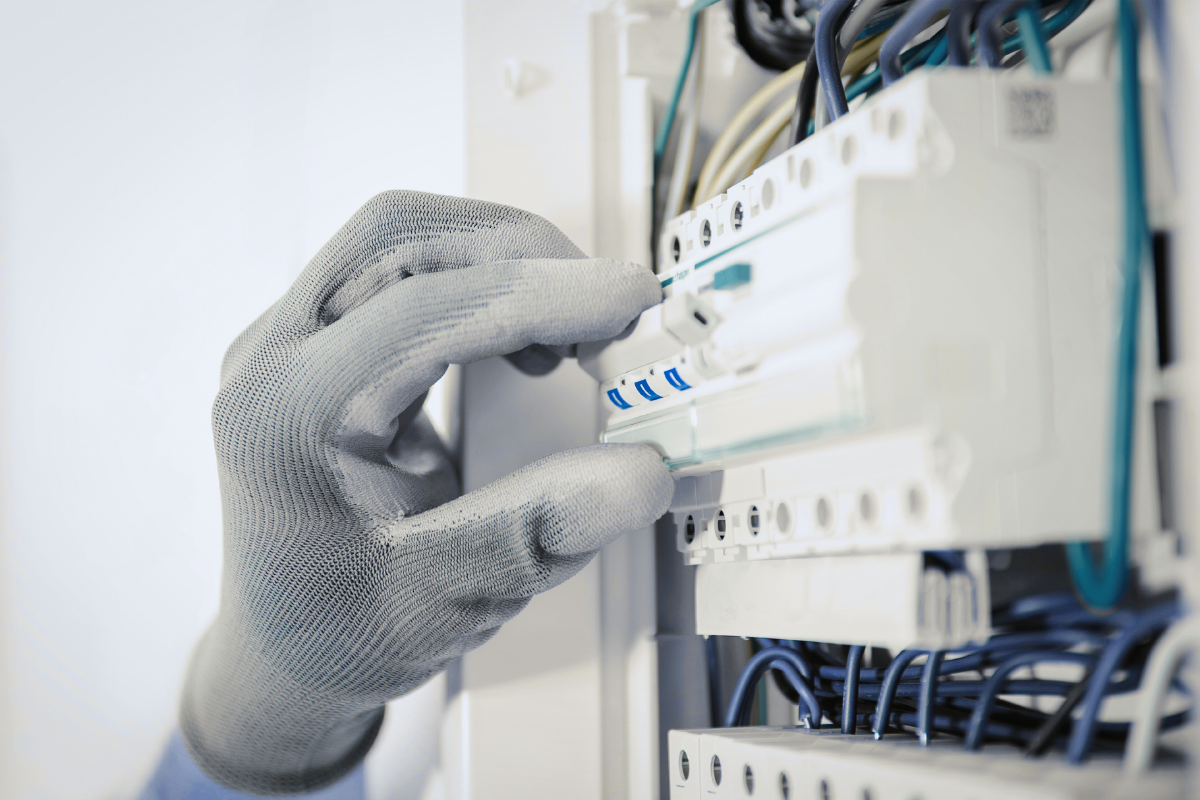
If your breaker keeps tripping, it’s not “random”—it’s doing its job. Breakers trip to prevent overheating, wiring damage, and fire risk. In Tampa Bay homes, repeated trips are often caused by overloaded circuits, failing devices, or wiring issues that need attention.
Here’s how to understand what’s happening, what you can safely check, and when it’s time to call a licensed electrician.
What It Means When a Breaker Trips
A breaker trips when it detects unsafe conditions such as:
Too much electrical demand on the circuit (overload)
Electricity “leaking” to ground (ground fault)
Dangerous arcing conditions (arc fault)
A weak or failing breaker
Common Reasons Breakers Trip
1) The circuit is overloaded
This is the most common cause. If the breaker trips when you run a microwave, air fryer, space heater, hair dryer, or vacuum—your circuit may be overloaded.
Signs of overload:
Trips happen during heavy usage
Lights dim when appliances turn on
Multiple high-load devices are on the same circuit
2) A specific appliance is faulty
A failing appliance can cause trips even when the circuit isn’t overloaded.
Quick safe test:
Unplug everything on that circuit
Reset the breaker
Plug items back in one at a time until it trips again
If one device triggers trips repeatedly, stop using it and have it checked.
3) Ground fault (especially in Tampa Bay’s humidity)
Moisture in outdoor outlets, garage outlets, or wet areas can cause ground faults that trip breakers or GFCI-protected circuits.
4) Arc fault / AFCI-related trips
AFCI breakers are designed to detect dangerous arcing. They may trip due to:
Loose wiring connections
Damaged cords
Aging outlets or switches
Incorrect wiring in a fixture or junction box
5) A loose connection or damaged wiring
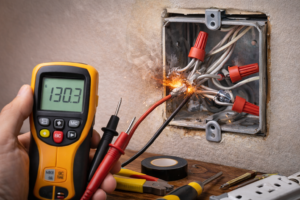
Loose terminations at outlets, switches, junction boxes, or the panel can create heat and intermittent trips. This is a safety concern and should be inspected.
6) The breaker itself is failing
Breakers can wear out. If a breaker trips easily or won’t reset even with minimal load, replacement may be needed.
7) Panel capacity or panel condition issues
If you’re adding load (EV charger, remodel circuits, appliances) or have an older panel, trips can be a sign the system needs capacity planning, repairs, or upgrades.
What You Can Safely Do (and What Not to Do)
Safe steps:
Unplug high-load devices and reset once
Reduce simultaneous demand on that circuit
Test appliances one at a time (as described above)
Note what was running when it tripped
Avoid:
Resetting the breaker repeatedly without finding the cause
Using extension cords as permanent solutions
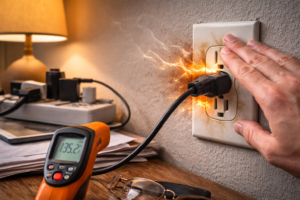
Ignoring warm outlets, burning smells, buzzing, or flicker
Opening the panel or outlet boxes (leave that to a pro)
When to Call an Electrician
Schedule service if:
The breaker trips repeatedly with normal use
The breaker won’t reset
You smell burning or see discoloration at outlets
Lights flicker and breakers trip in multiple rooms
Outlets or switches feel warm
Tripping started after storms, flooding, or electrical work
Common Fixes We Recommend
Depending on what we find, solutions may include:
Adding dedicated circuits for high-load appliances
Replacing a failing breaker
Correcting loose wiring connections
Upgrading GFCI/AFCI protection where needed
Electrical panel upgrades or subpanel additions for capacity
Need Breaker Troubleshooting in Tampa Bay?
Power LLC provides fast troubleshooting and code-compliant repairs across Tampa Bay. We’ll identify the root cause, explain your options clearly, and recommend the safest long-term fix.
Request service today if your breaker keeps tripping.