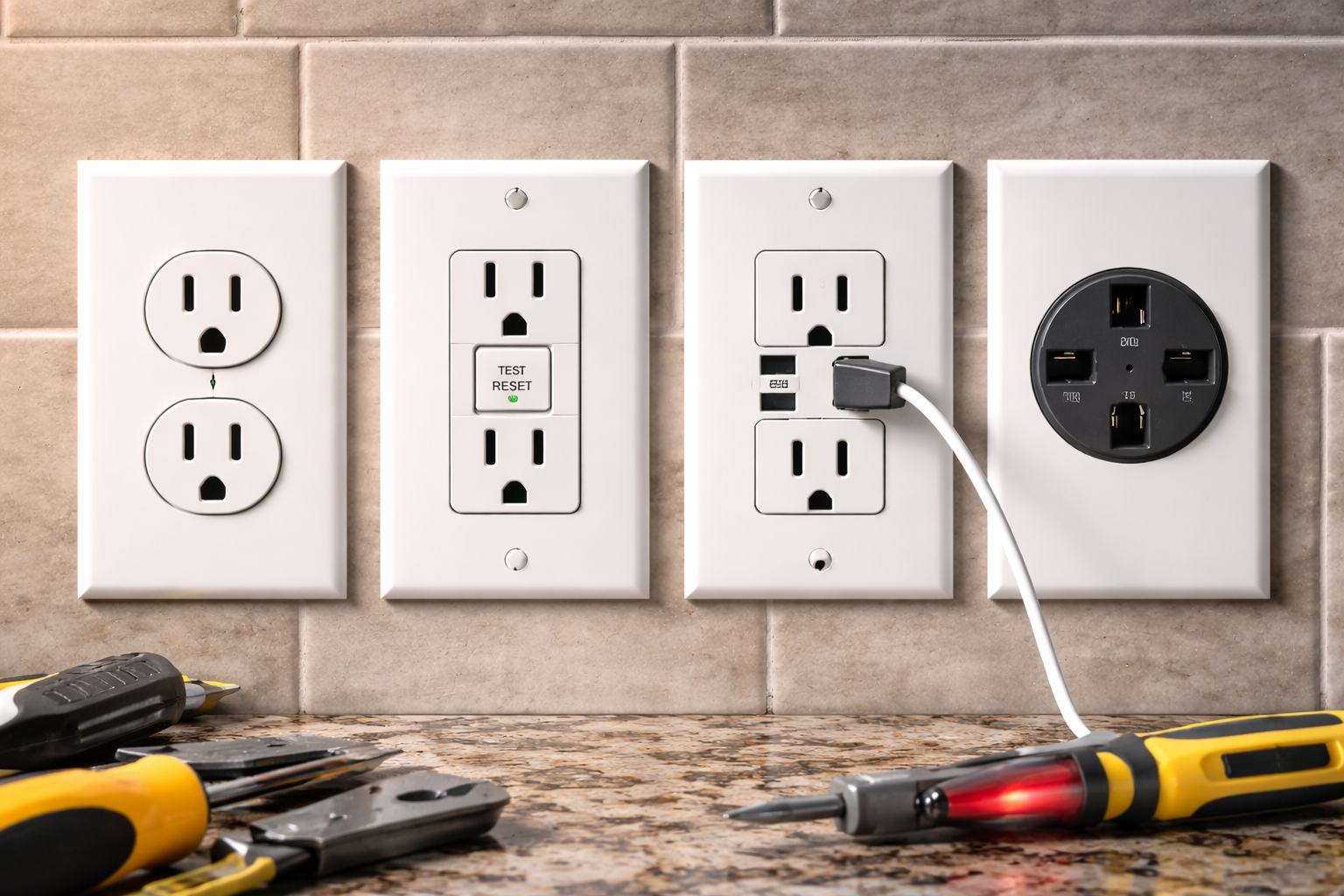
Most homeowners think of an outlet as “just a plug.” But different outlet types are designed for different safety needs, locations, and electrical demands. Choosing the right outlet upgrade can reduce shock risk, prevent nuisance tripping, and improve convenience—especially in kitchens, bathrooms, garages, and outdoor areas.
Here’s a clear breakdown of the most common outlet types—and when to use each one in a Tampa Bay home.
Common Types of Electrical Outlets (and What They’re For)
1) Standard (15A/20A) Outlets
These are the most common outlets found throughout living areas. They’re fine for general use—lamps, TVs, chargers—when the circuit is properly sized and the outlet is in good condition.
Consider upgrading if:
Plugs feel loose or fall out
The outlet is discolored or warm
You’re using heavy-load devices on the same circuit
2) GFCI Outlets (Ground Fault Protection)
GFCI outlets reduce shock risk by shutting off power quickly when they detect a ground fault. They’re commonly required in areas with moisture.
Where they’re most common:
Bathrooms, kitchens, laundry
Garages
Outdoor outlets
Pool/spa and dock/wet locations
If yours won’t reset or trips often: it can indicate moisture intrusion, a failing device, or a downstream fault.
3) AFCI Protection (Arc Fault Protection)
AFCI protection helps detect dangerous arcing conditions that can lead to electrical fires. In many homes, AFCI protection is provided by breakers, but in some setups it can also be provided at the outlet.
Often relevant in:
Bedrooms and living areas
Circuits where code requires arc-fault protection
4) Tamper-Resistant (TR) Outlets
TR outlets are designed to prevent children from inserting objects into the slots. They look like standard outlets but add a built-in safety mechanism.
Great choice for:
Homes with kids
Rental properties
Any home as a general safety upgrade
5) Weather-Resistant (WR) Outlets + “In-Use” Covers
Outdoor outlets should be rated for wet locations and protected with proper covers to reduce water intrusion and corrosion.
Recommended for:
Exterior outlets
Covered patios
Docks and waterfront environments
6) USB / USB-C Outlets
These add built-in charging ports for phones and devices. They’re mostly a convenience upgrade, but they’re popular in kitchens, bedrooms, and home offices.
Best places:
Kitchen counters (where allowed by code/layout)
Bedrooms and living rooms
Home office areas
Quick Upgrade Guide (Easy Decisions)
If you want fast “best practice” upgrades:
Kitchen/Bath/Outdoor/Garage: GFCI (and weather-rated where needed)
Bedrooms/Living Areas (code-dependent): AFCI protection
Kids’ rooms / common spaces: Tamper-resistant outlets
Outdoor / dock areas: Weather-resistant + in-use covers
Home office: USB-C outlets + surge protection strategy
When to Replace Outlets (Warning Signs)
Schedule service if you notice:
Warm outlets or burning smell
Discoloration/scorch marks
Buzzing or crackling
Loose plugs or intermittent power
Outlets that stop working repeatedly
Want the Right Outlet Upgrades in Tampa Bay?
Power LLC upgrades outlets safely and code-compliantly—GFCI/AFCI protection, outdoor-rated outlets, tamper-resistant replacements, and clean labeling where needed.
Request service and tell us where the outlets are located—we’ll recommend the safest upgrade.