
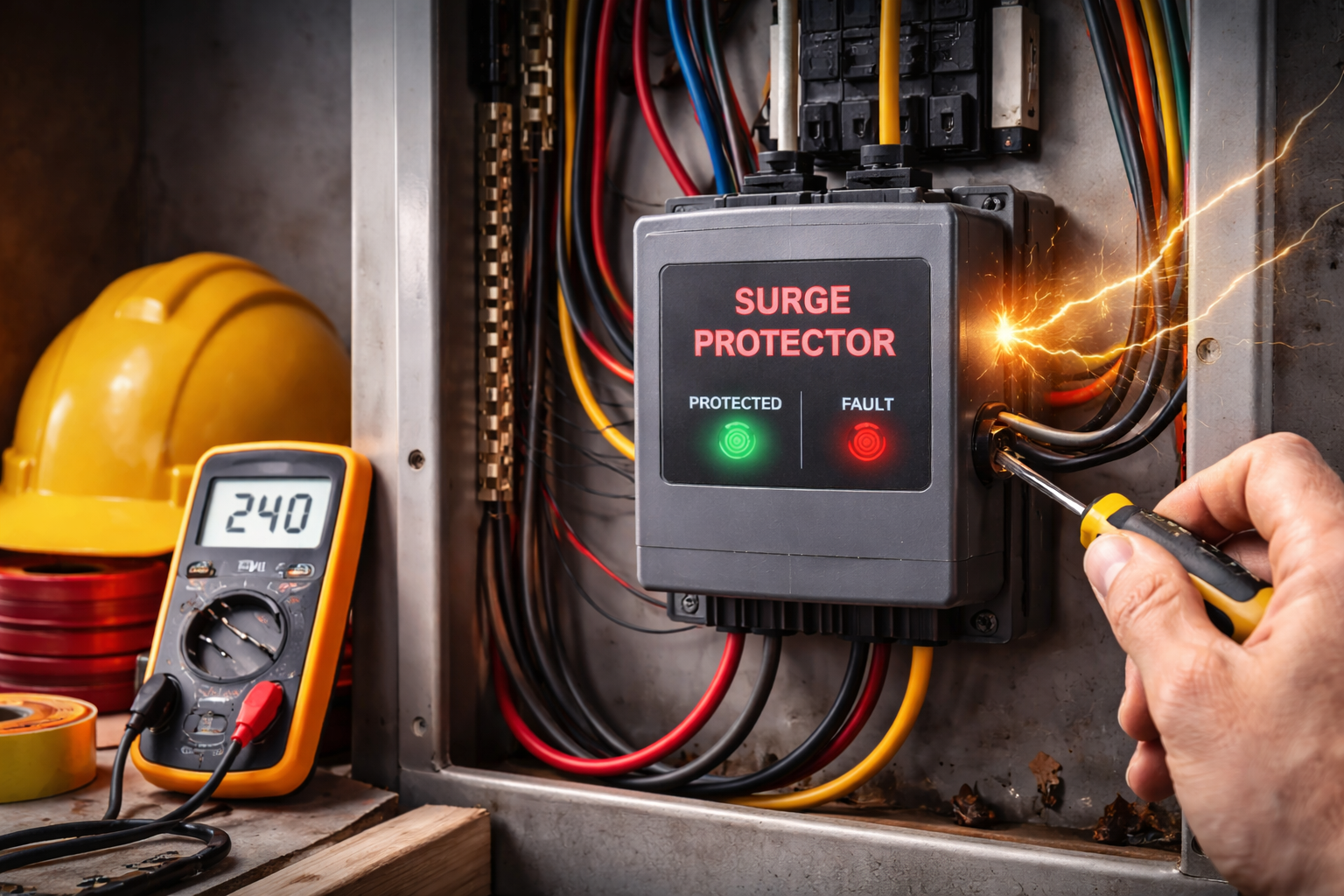
Florida homes deal with power events year-round—lightning, utility switching, and voltage spikes that can quietly damage appliances and sensitive electronics. If you’ve ever replaced a TV, modem, refrigerator control board, or garage door opener after a power event, you’ve seen how expensive surges can be.
A common question we hear in Tampa Bay is: Is whole-home surge protection worth it? Here’s a simple breakdown of what it does, when it’s most valuable, and how to choose the right setup.
What Is Whole-Home Surge Protection?
Whole-home surge protection is a device installed at your electrical panel. It helps reduce damage from voltage spikes that can affect multiple circuits at once. Think of it as a first line of defense—protecting your electrical system at the source.
What It Protects (and What It Doesn’t)
What it helps protect
Major appliances and their control boards (refrigerators, washers/dryers, HVAC controls)
Electronics throughout the home (TVs, routers, computers)
Multiple circuits impacted by utility switching and power events
What it doesn’t guarantee
Total protection from every possible event
Protection against direct lightning strikes to a specific device
Protection for low-voltage lines (internet/cable) unless those are also protected
For most homes, the best approach is layered:
Whole-home surge protection + quality plug-in surge strips for sensitive electronics.
Signs It’s Worth It for Your Home
Whole-home surge protection is especially worth considering if:
1) You’ve had electronics damaged before
If you’ve lost devices after outages or power events, this upgrade can help reduce repeat damage.
2) You have expensive appliances or smart home equipment
Modern appliances and smart devices often have sensitive electronics that are vulnerable to spikes.
3) You work from home or rely on stable connectivity
Surges can take out routers, modems, and network gear—small devices with big impact.
4) Your area sees frequent outages or flicker events
Repeated power events can cause cumulative wear and unexpected failures.
5) You’re adding major electrical upgrades
Projects like EV chargers, generator transfer equipment, or panel upgrades are a good time to add surge protection.
Whole-Home Surge Protection vs Plug-In Surge Strips
Plug-in surge strips
Protect only what’s plugged into them
Don’t protect hardwired equipment (HVAC, built-in appliances)
Quality varies widely (many cheap strips offer limited protection)
Whole-home surge protection
Helps reduce spikes at the panel before they spread across circuits
Adds protection for hardwired equipment
Works best as part of a layered setup
Best practice: Use both—panel surge protection plus plug-in surge protection for sensitive electronics.
What Installation Typically Includes
A licensed electrician will usually:
Verify panel compatibility and available space
Install the surge protection device at the panel
Confirm grounding and bonding are in good condition (important for performance)
Test and label the installation as needed
This is usually a straightforward upgrade and pairs well with other safety improvements.
Related Safety Upgrades That Pair Well
1) GFCI outlet upgrades
Important for kitchens, bathrooms, garages, outdoors, and wet areas.
2) AFCI protection where required
Helps detect arc faults that can lead to electrical fires.
3) Panel labeling and circuit organization
Makes troubleshooting and future upgrades easier and safer.
4) Electrical safety inspection
Helps identify hazards like overheating connections, corrosion, or overloaded circuits.
Want Surge Protection Installed in Tampa Bay?
Power LLC installs whole-home surge protection and electrical safety upgrades across Tampa Bay. We’ll explain options clearly and recommend the right setup for your panel, your home, and your daily electrical needs.
Request service today and ask about whole-home surge protection.
Need an electrician in Tampa Bay?
Power LLC is a Florida-licensed electrical contractor (EC13015512) serving Tampa, Clearwater, St. Petersburg, New Port Richey, Brandon, and Wesley Chapel. Free estimates and code-compliant work — every job.